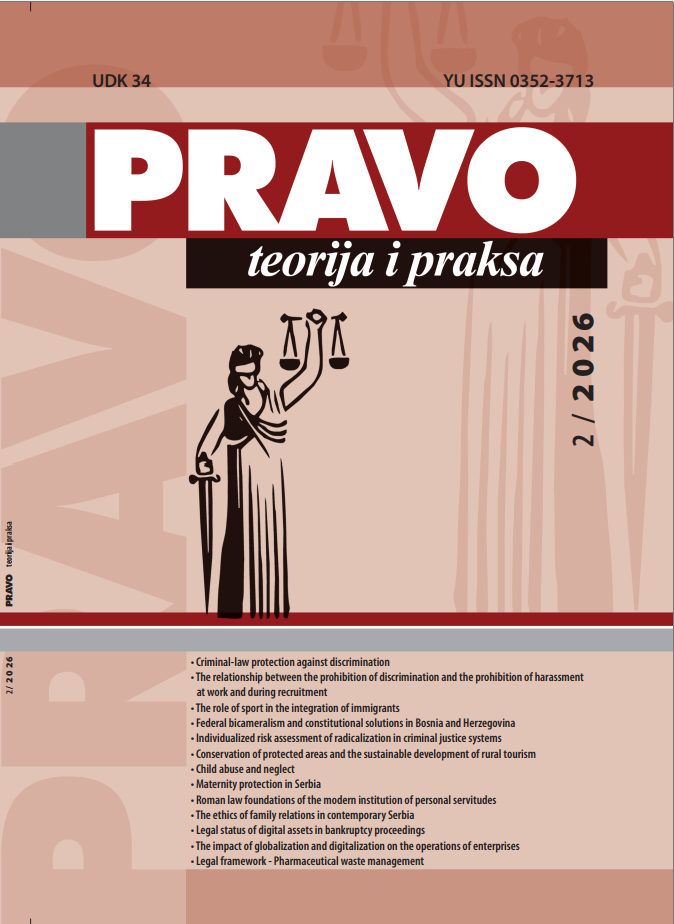
ЕТИКА ПОРОДИЧНИХ ОДНОСА У САВРЕМЕНОЈ СРБИЈИ И УТИЦАЈ СРПСКЕ ПРАВОСЛАВНЕ ЦРКВЕ
##plugins.pubIds.doi.readerDisplayName##:
https://doi.org/10.5937/ptp2602161KКључне речи:
породица, етика, Српска православна црква, породично право, савремено друштвoСажетак
Савремена породица у Србији пролази кроз сложен процес трансформације, обликован дубоким друштвеним, економским и културним променама. Процеси модернизације, глобализације и секуларизације значајно утичу на традиционалне породичне улоге и етичке норме које уређују породичне односе. У том контексту, Српска православна црква представља један од кључних друштвених актера, који настоји да очува и пренесе традиционалне моралне вредности везане за брак, родитељство и породичну солидарност. Предмет овог рада јесте анализа односа између етичких норми, верског учења и правне заштите породице у савременој Србији. Основно истраживачко питање гласи: У којој мери и на који начин Српска православна црква данас заиста утиче на етику породичних односа у оквиру секуларне и правне државе? Посебан допринос рада огледа се у интердисциплинарном приступу који повезује етику, социологију, религију и породично право, са циљем да се покаже на који начин се морални ауторитет Цркве остварује у оквиру уставне заштите породице и вредносног плурализма савременог друштва. Метод рада заснива се на анализи релевантне домаће и стране литературе, као и на критичком сагледавању савремених друштвених процеса у Србији.
Референце
Антонић, С. (2010). Култура и традиција у савременом српском друштву. Београд: Службени гласник
Berger, P. L. (1999). The Desecularization of the World: Resurgent Religion and World Politics. Washington, D.C.: Ethics and Public Policy Center
Beck, U., & Beck-Gernsheim, E. (2002). Individualization: Institutionalized Individualism and its Social and Political Consequences. London: Sage
Giddens, A. (1992). The Transformation of Intimacy. Cambridge: Polity Press
Goode, W. (1982). The Family. Englewood Cliffs: Prentice Hall
Јеротић, В. (2005). Породица и морал. Београд: Арс либри
Sančanin, Đ., & Krstinić, D. (2023). The influence of family and school in recognizing COVID 19 as a security risk. Pravo ‒ teorija i praksa, 40(1), pp. 13–26. https://doi.org/10.5937/ptp2301013S
Parsons, T. (1951). The Social System. New York: Free Press
Поњавић, С. (2016). Породично право. Београд: Правни факултет 10. Krstinić, D. M., Počuča, M. B., & Šarkić, N. (2024). Underage marriage: A comparative analysis. Pravo – teorija i praksa, 41(2), pp. 6–22. https://doi.org/10.5937/ptp2402006K
Zizioulas, J. (1985). Being as Communion. London: Darton, Longman & Todd
Устав Републике Србије. Службени гласник РС, бр. 98/06, 115/21
Породични закон Републике Србије. Службени гласник РС, бр. 18/05, 72/11 – др. закон и 6/15
Закон о црквама и верским заједницама. Службени гласник РС, бр. 36/06
##submission.downloads##
Објављено
Како цитирати
Bрој часописа
Секција
Лиценца
Сва права задржана (c) 2026 Dalibor Krstinić, Doc. dr Djordje Sančanin , Prof. dr Zoran Vavan

Овај рад је под Creative Commons Aуторство 4.0 Интернационална лиценца.